
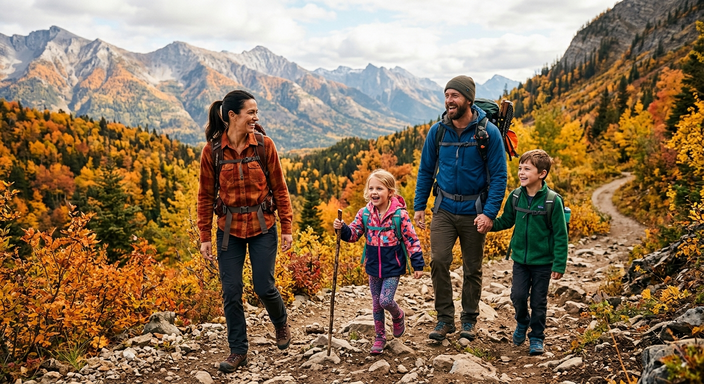
Getting a family outdoors together often fails not from lack of interest but from picking an activity pitched at the wrong level - too demanding for younger kids, too tame to hold anyone's attention. The activities that work best tend to have built-in flexibility for different ages and energy levels.
A short nature trail with a loop option, a park with a turnaround point, or a bike path with several access points all let a family adjust the outing's length on the fly. This flexibility matters more with kids than adults, since energy and patience can change quickly partway through.
A simple scavenger list (types of birds, leaf shapes, rocks), a turnaround landmark to "reach," or a picnic spot as the destination gives an otherwise open-ended walk or ride a sense of purpose that keeps younger kids engaged longer.
Snacks, water, and sun protection matter more on family outings than solo ones, since the pace is often slower and the outing takes longer than the same activity would for adults alone. Planning around the least experienced or youngest participant keeps the day enjoyable for everyone rather than a struggle for one person.